Accord Australasia responds to calls for a Queensland schools sunscreen ban
What the science actually says about sunscreen and the Great Barrier Reef Key points What's telling is what's not on this list ...
2 min read
Damian Mitsch
Updated on September 11, 2026
Media Statement Accord Australasia
Sunscreen, Science & Public Trust: Accord Australasia responds to homosalate coverage
11 September 2026. Sydney, Australia. This week's coverage of a Queensland biomonitoring study told parents their children carry 'alarming' or 'dangerous' levels of a sunscreen chemical. Neither the regulator nor the doctors quoted in those same stories said anything of the kind.
The Therapeutic Goods Administration told 7NEWS directly: 'detection of Homosalate metabolites in urine does not itself indicate a health risk'. It went further: the risks of frequent Homosalate use 'are minimal compared to those associated with prolonged sun exposure and sun burn'. The Sydney Morning Herald separately reported the TGA's own view that the science is not yet 'adequate to derive a conclusion as to causality in humans'.
The doctors interviewed said the same thing more plainly. Dr Nerilee Wall of Queensland Children's Hospital told 7NEWS the study 'doesn't say that this compound is a problem and it didn't point to any harm'. Dr Maria Boulton of AMA Queensland said: 'I just don't have any evidence or data to say exactly what the effects of this compound are'. Her next line belongs in the headline: 'Skin cancer is one of the most common cancers.'
The guidance value at the centre of the story is not a danger line. Germany's Human Biomonitoring Commission set it from animal data, using homosalate's most sensitive known effect: changes in the kidneys. It applies the large safety margins toxicology normally uses. Exceeding it means exposure sits above a cautious, animal-derived benchmark. No child in the study showed signs of kidney disease. The study measured exposure through urine analysis rather than clinical outcomes, and reported no health effects in any participant.
The study itself is legitimate, peer-reviewed exposure research, and it should not be dismissed. The TGA and AICIS have reviewed homosalate's permitted concentration since December 2024, over a year before this study was published. 'Industry supports that review, and wants it decided on the evidence,' said Damian Mitsch, Executive Director of Accord Australasia. The study's own authors gave the clearest warning against how it has been covered. A loss of public confidence in sunscreen safety, they wrote, 'could have disastrous consequences by leading to ineffective sun protection behaviour'.
A biomarker study measures exposure. It does not measure harm, and it is not a verdict on product safety. Reporting the two as the same thing turned a study that found no evidence of harm to any child into a story about danger.
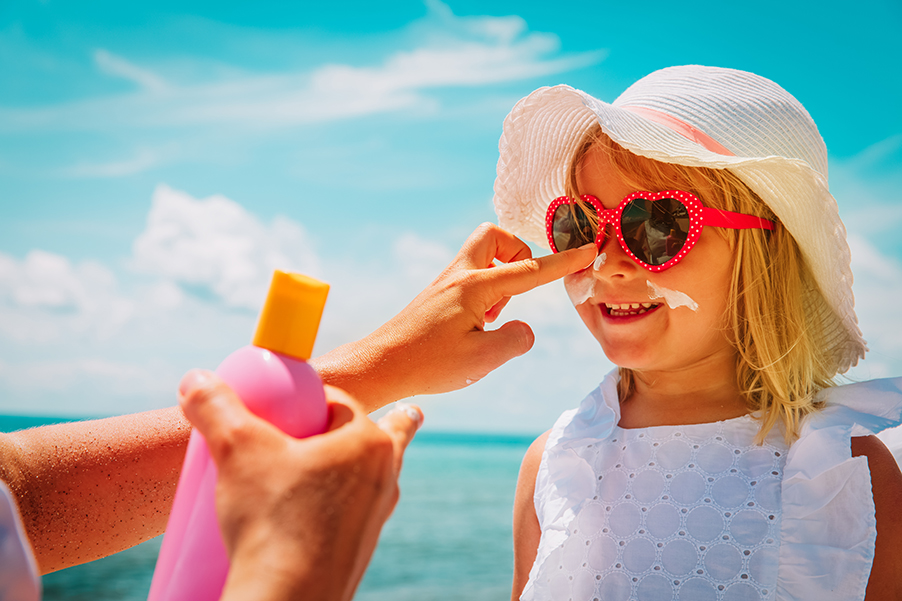
Australia has one of the highest skin cancer rates in the world. Regular sunscreen use is the single biggest reason that rate is not higher. 'Nothing in this study is a reason for any parent to stop applying sunscreen to their kids', Mr Mitsch said. 'Keep doing it.'
About Accord Australasia Accord Australasia is the peak body for the cosmetic, personal care, home care, and industrial and institutional cleaning products industry in Australia. Accord has represented the sunscreen industry for 20+ years.
ENDS
For media inquiries: Damian Mitsch, Executive Director, Accord Australasia, 0403 372 900, dmitsch@accord.asn.au
What the science actually says about sunscreen and the Great Barrier Reef Key points What's telling is what's not on this list ...
If you have searched for the Australian Sunscreen Council or the Australian Sunscreen Association and ended up somewhere other than Accord...
From crisis to collaboration: Sunscreen sector charts a path forward | Retail Beauty March 2026 SPF was rarely out of the headlines in 2025. Amid...